Project details
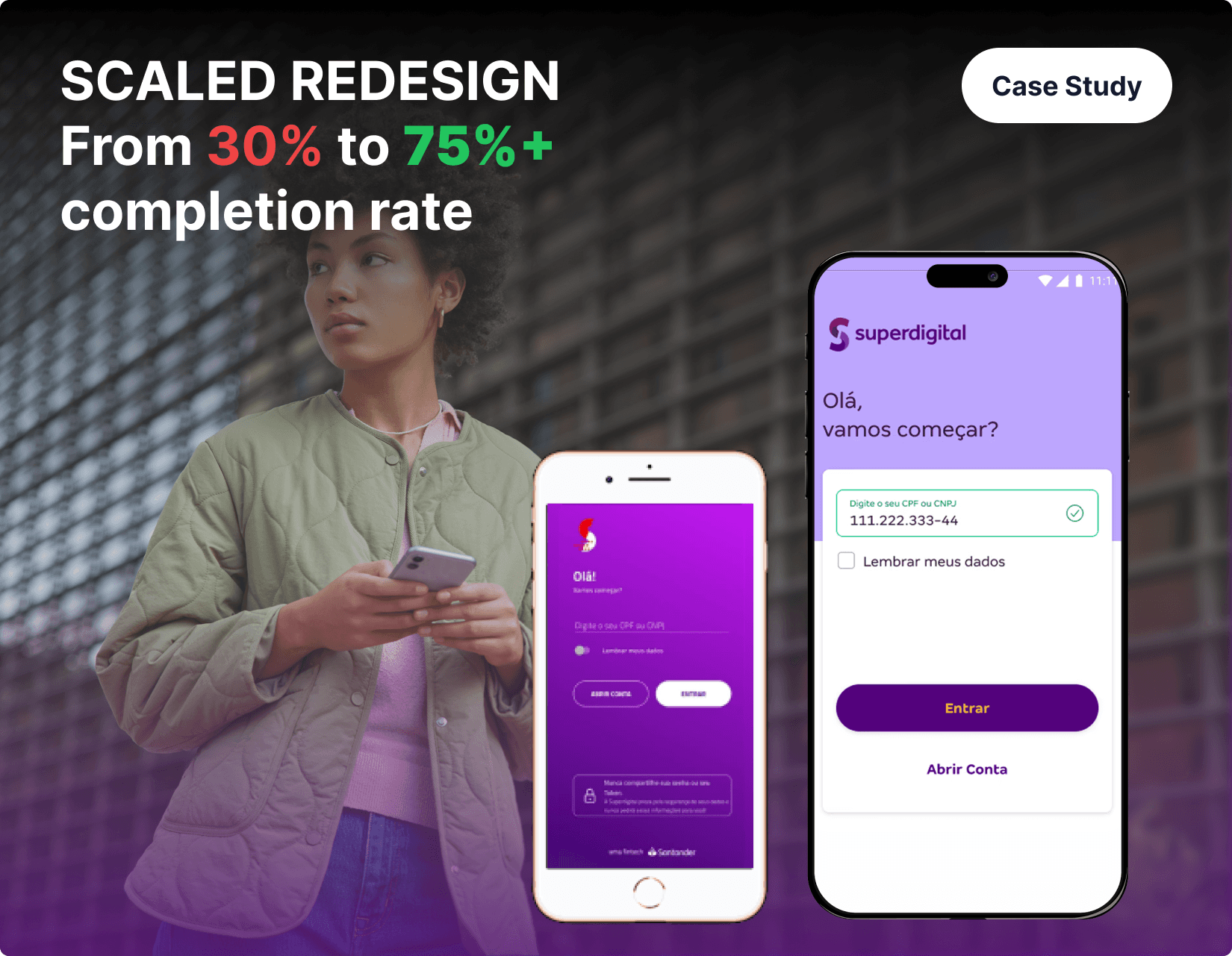
Fintech Onboarding Redesign: Transforming Conversion Through User-Centered Design
Context & Problem Definition
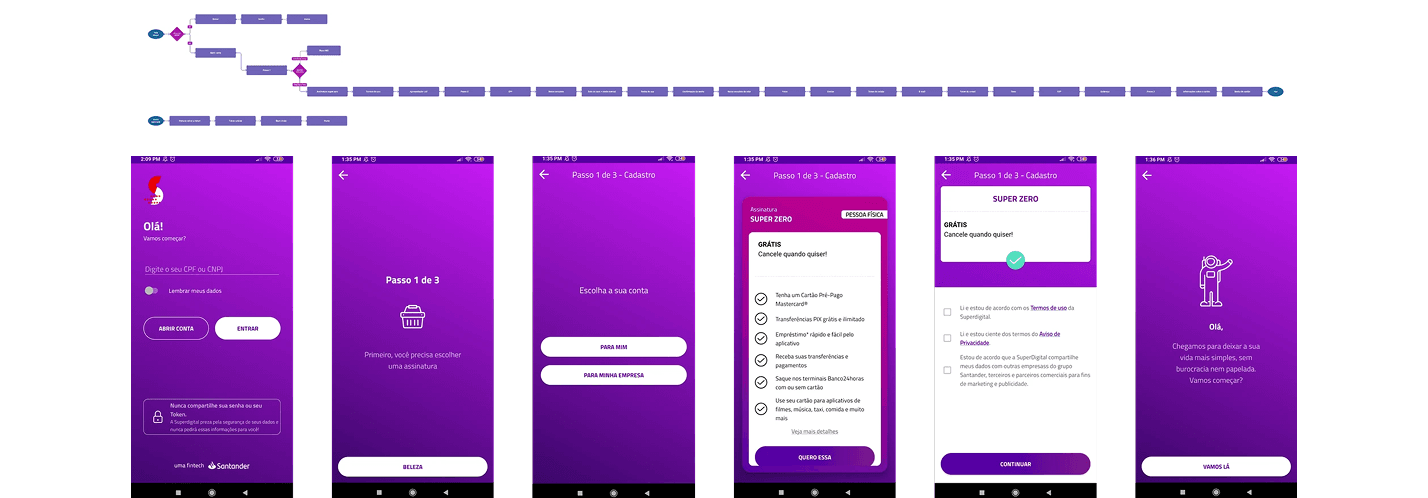
A Brazilian fintech serving classes C and D faced critical conversion challenges with their account opening process. The existing 15-screen onboarding journey achieved only 30% completion rate, creating substantial business inefficiencies and user frustration.
Core Problems Identified:
Complex multi-screen process with excessive friction points
86% of automatically issued cards remained unused, generating massive operational waste
High volume of onboarding-related support tickets indicating user confusion
Outdated UI inconsistent with new brand identity and design system
Poor app store ratings reflecting user dissatisfaction with registration experience


Strategic Problem Definition
Priority Issues for Resolution:
Request authentication token only once per session
Implement comprehensive inline error handling
Surface critical information more accessibly
Provide persistent help button functionality
Deliver continuous feedback on account-review status
Group related inputs into logical single screens
Remove unnecessary data collection fields
Improve overall customer communication clarity
Critical Business Insight: Research revealed only 14% of users ever used their issued cards for transactions, while 76% never used cards even once, highlighting massive operational inefficiency opportunity.
Design Solution & Implementation
Impact-Effort Matrix Analysis: Systematic evaluation of proposed improvements using impact-versus-effort matrix guided prioritization and shaped implementation roadmap.
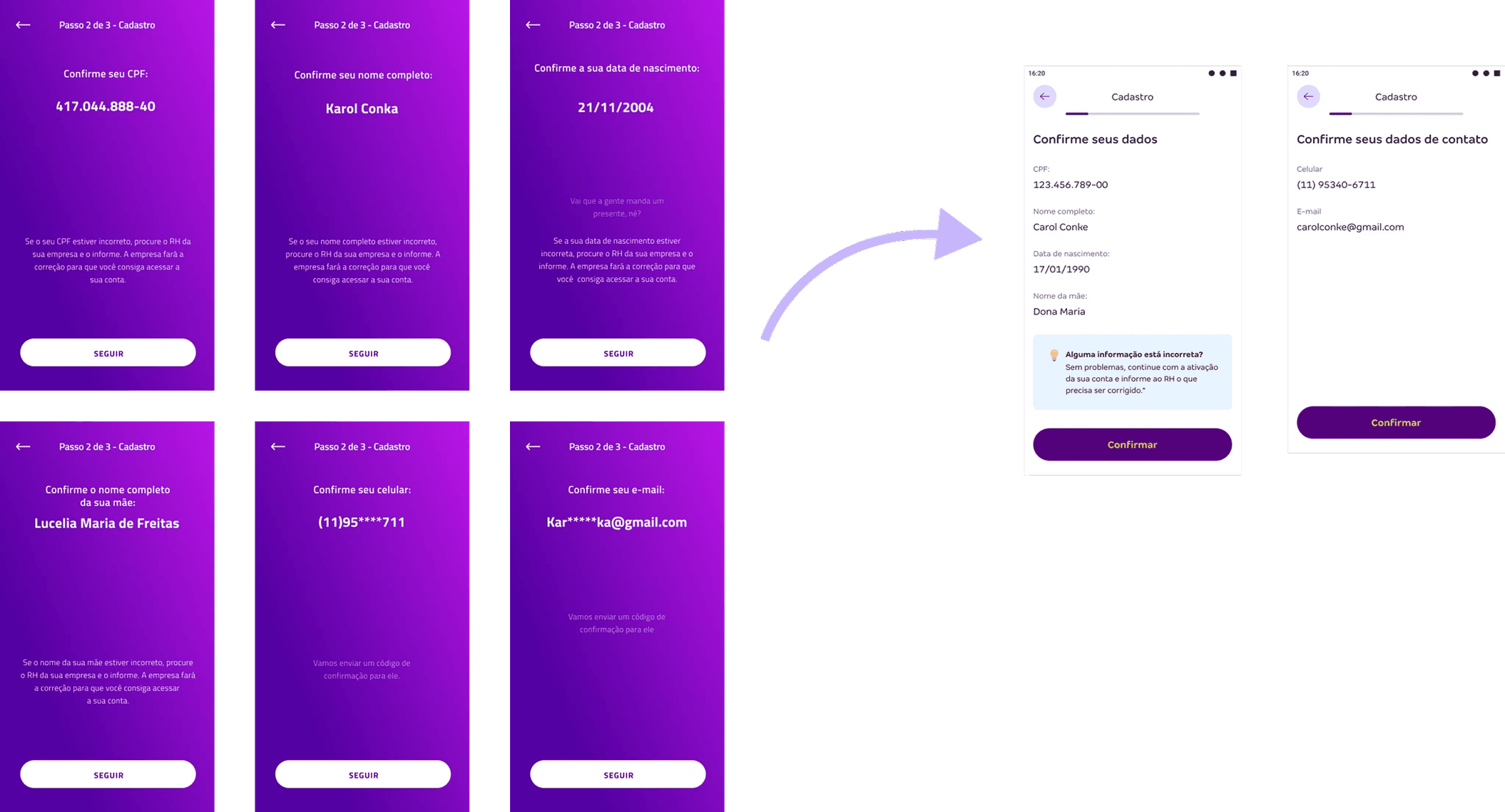
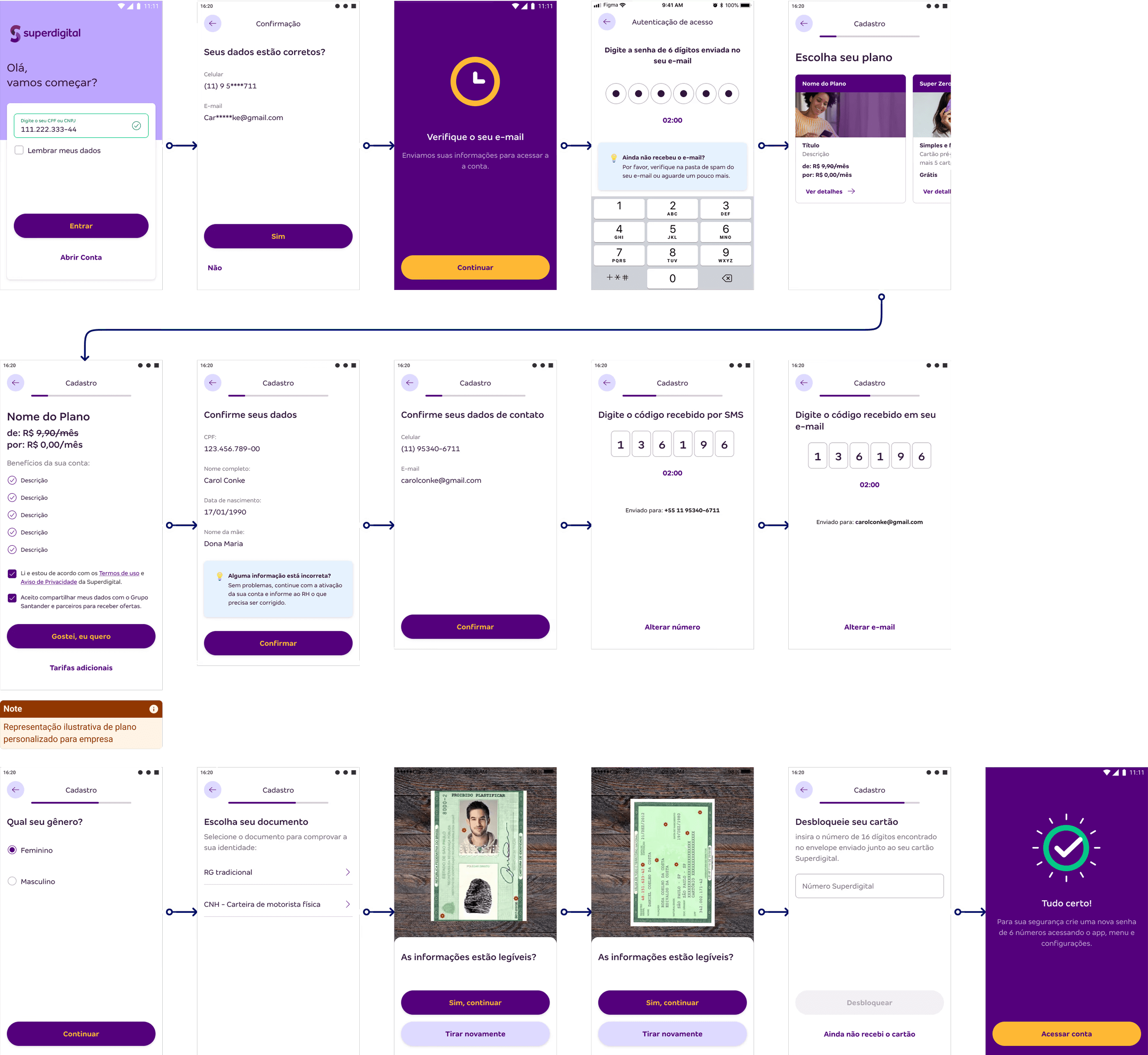
Design System & Rebranding Integration: Applied updated design system across entire onboarding flow, aligning colors, typography, and components with new branding standards. Personal-information checks consolidated into two screens, reducing average clicks from 10 to 4.
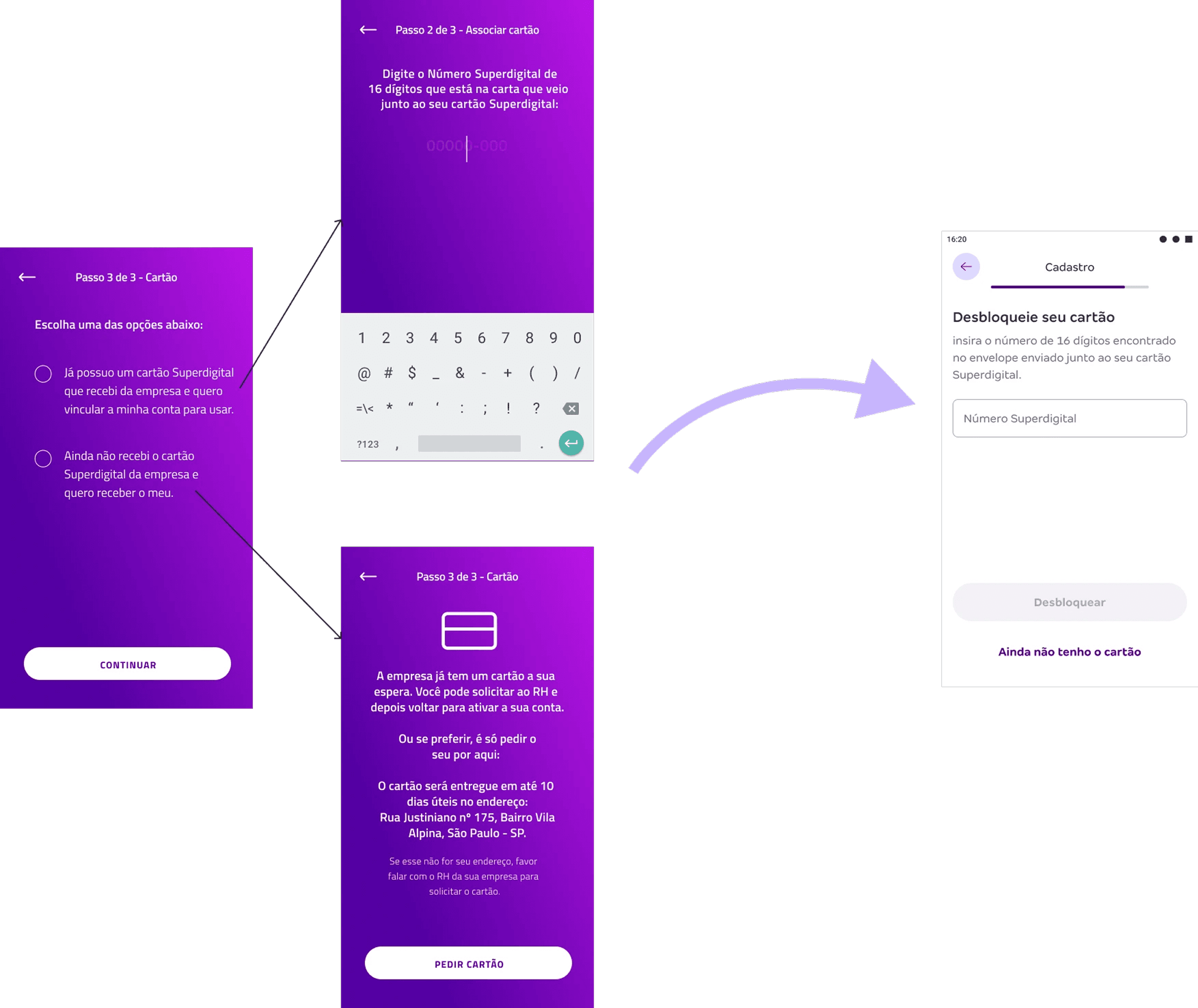
Card Issuance Optimization: Simplified card-association step replacing multi-option chooser with single information-request screen featuring clear "Request Card" option only for users who haven't previously requested, eliminating unnecessary issuance costs.
Micro-Interaction Feedback System: Implemented three-tier feedback mechanism guiding users through each step:
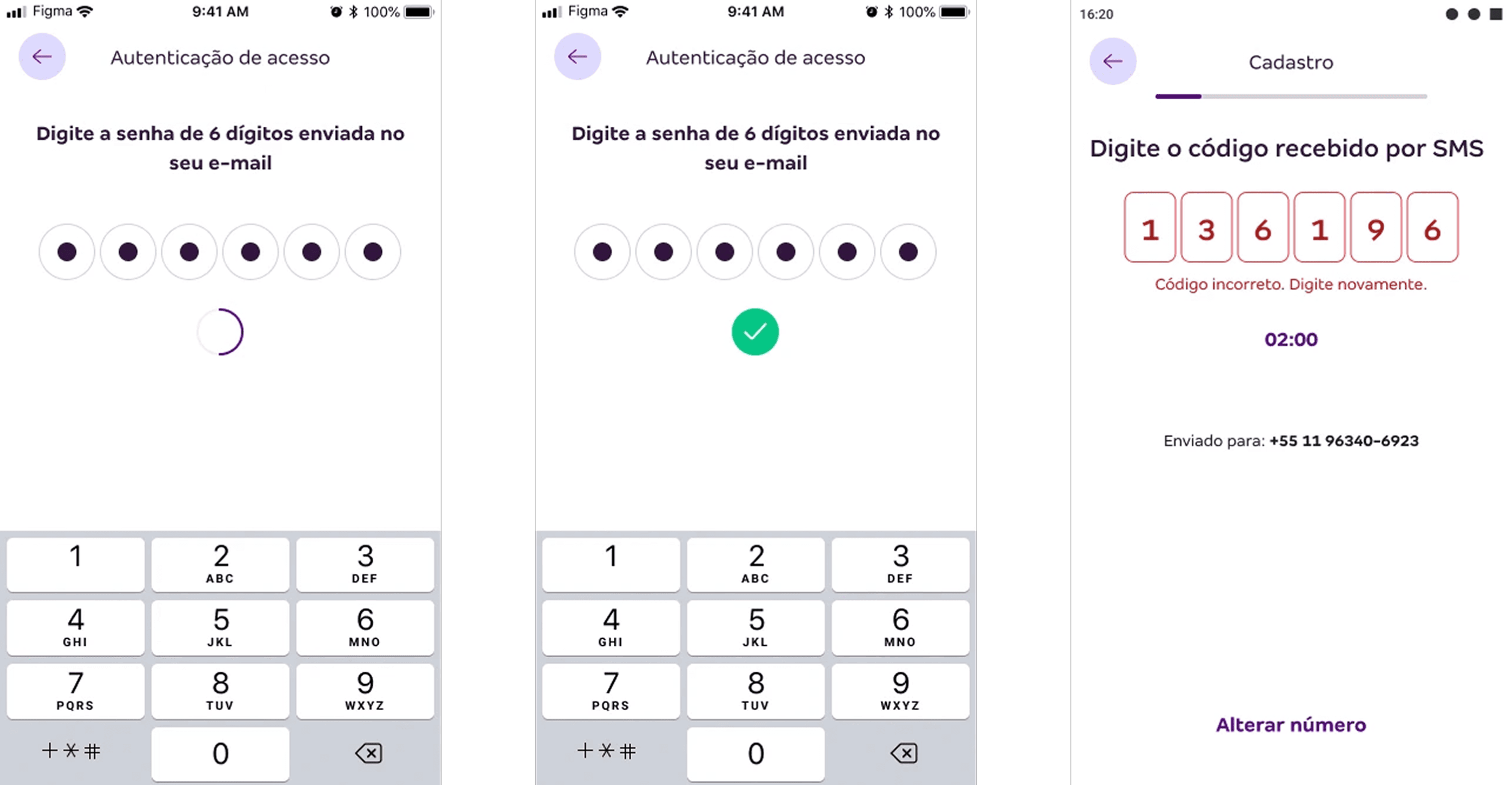
Loading States: Every input interaction displays brief loading animation signaling progress
Positive Feedback: Successful inputs transform loading animation into green checkmark
Negative Feedback: Contextual helper text appears on errors, explaining issues and correction methods
Enhanced User Experience Features:
Token requested only once per session with resolved delivery instabilities
Help and contact options added for ongoing support
Streamlined flow optimized for speed, agility, and user-friendliness
Specific Design Solutions
Account Selection Redesign: Redesigned account selection screen clearly differentiating each account type using visuals, descriptions, and larger tap areas, making selection process more intuitive and visually appealing.
Progress Visualization: Removed screens indicating next steps, replaced with progress bar allowing users to track journey more efficiently.
Plan Selection Enhancement: Redesigned plan selection using carousel format displaying all available options. Each plan includes clear details on benefits, pricing, and additional fees, promoting transparency and informed decision-making.
Resume Functionality: Implemented save-and-resume capability allowing users to continue from interruption point or restart completely through simplified, straightforward design.
Behavioral Analysis
App store reviews and support tickets exposed three critical failure patterns:
- Token delivery failures creating authentication loops
- Unclear fee structure generating trust issues
- Absent feedback mechanisms causing abandonment anxiety
Market Context
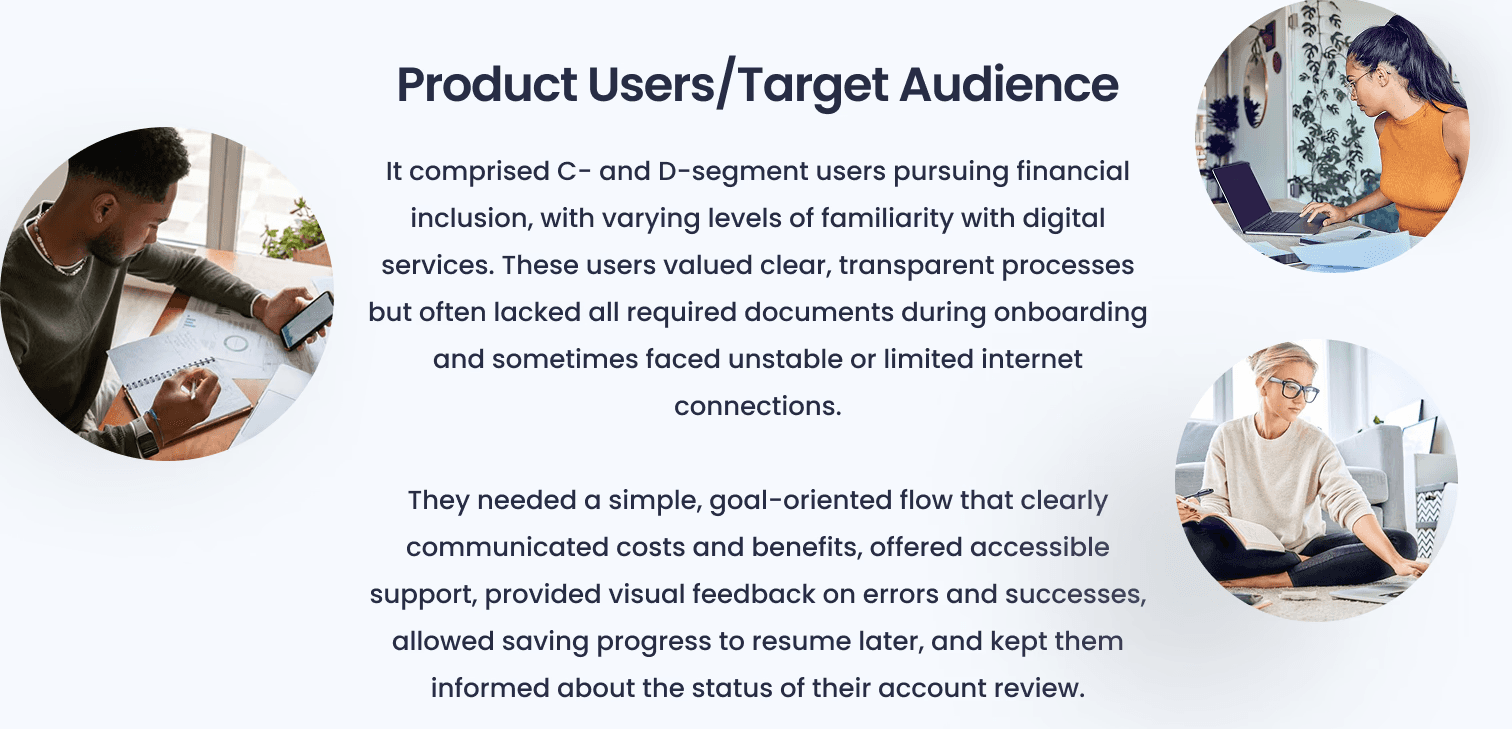
Benchmarking C/D-focused fintechs revealed standard patterns this product was missing: progress indicators, contextual help, and save-and-resume functionality and essential for users with intermittent connectivity and shared devices.
Critical Discovery
Only 14% of issued cards were ever used, while 86% remained dormant, indicating fundamental misalignment between onboarding promises and actual user needs. This insight shifted focus from card activation to genuine product engagement.
Solution Design
System Integration & Flow Optimization
Applied the updated design system while restructuring the information architecture. Consolidated personal-information confirmations from multiple screens into two focused inputs, reducing core interaction from 10 to 4 clicks. Replaced standalone "next step" screens with a persistent progress bar, giving users continuous journey visibility—essential for the C/D demographic managing unfamiliar financial processes.
Card Issuance Transformation
Eliminated automatic card generation that created 86% waste. Redesigned the selection interface from complex multi-option chooser to single information screen with contextual "Request Card" option—only visible for users who haven't previously requested. This strategic shift cut annual card costs by 89% while preserving user agency.
Feedback Architecture
Implemented comprehensive micro-interaction system addressing user review complaints about "no feedback":
- Loading states for every input with brief animations signaling system response
- Positive confirmations morphing loading into green checkmarks for successful inputs
- Contextual error handling with helper text explaining issues and correction methods
This feedback loop substantially enhanced user confidence and directly contributed to completion rate improvements.
Enhanced User Journey
- Single-session authentication: Token requested once per session, eliminating the repetitive loops causing early abandonment
- Save & Resume functionality: Critical for users with connectivity constraints or shared devices
- Transparent plan selection: Carousel format with comprehensive benefit details, clear pricing, and fee breakdowns, directly addressing trust issues identified in user research
Account Selection Redesign
Enhanced visual differentiation between account types using improved descriptions and larger tap areas, making selection more intuitive for users less familiar with financial product categories.
Implementation Constraints
Timeline and technical limitations required strategic compromises: help and contact features were deferred to post-launch phases, and some validation processes remained server-side, creating minor latency issues later optimized.
Measured Impact
The strategic redesign delivered measurable business transformation:
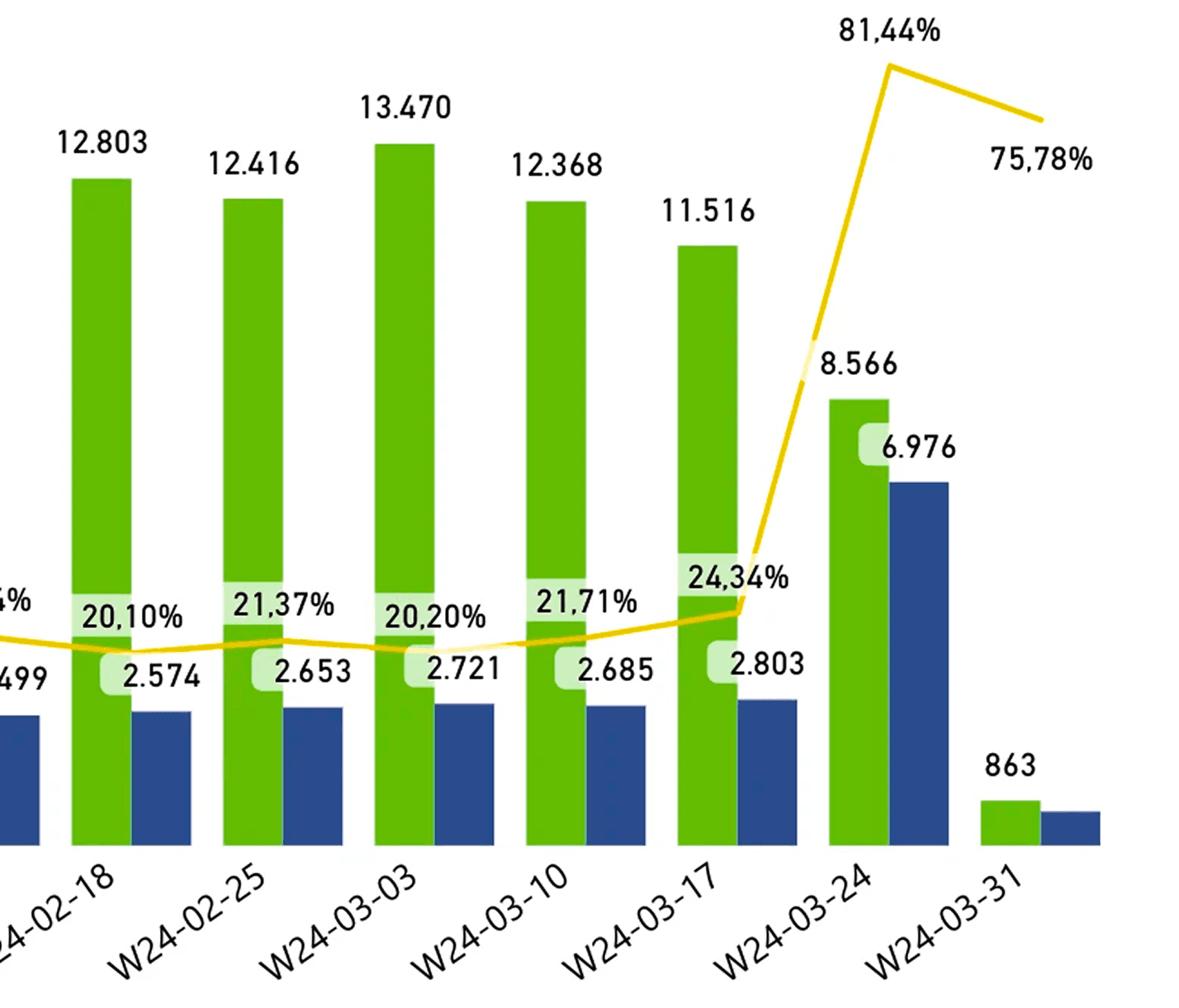
- Completion rates: 30% → 75%+
- Plan sales: 4x increase (first month)
- Support tickets: 43% reduction
- Customer conversions: 60%+ growth
- Operational efficiency: 89% card cost reduction
- User satisfaction: Consistent app store rating improvements
These results demonstrate how user-centered design decisions can simultaneously solve customer pain points and business inefficiencies, particularly when solutions are tailored to specific demographic constraints and behaviors.
Role & Contribution
Research Leadership:
Spearheaded competitive analysis and conducted comprehensive user review assessments
Created detailed process maps revealing critical insights about user friction points
Led impact-effort matrix analysis guiding strategic prioritization decisions
Interaction Design Innovation:
Developed comprehensive micro-interaction system designing intuitive feedback with contextual loading states, positive confirmations, and clear error guidance
Created substantial enhancements to user confidence and flow completion through thoughtful interaction patterns
Cross-Functional Integration:
Collaborated with design system team ensuring visual consistency across all touchpoints
Aligned with business stakeholders on strategic objectives despite significant technical and timeline constraints
Coordinated implementation priorities balancing user experience goals with operational efficiency requirements
Results & Business Impact
Conversion Metrics:
Onboarding completion rates increased from below 30% to over 75%
Overall customer conversion grew by 60%
Plan sales quadrupled in the first month post-launch
Operational Efficiency:
Annual card issuance costs reduced by 89% through optimized request process
Onboarding-related support tickets decreased by 43%
App store ratings showed consistent improvement trajectory
User Experience Validation:
Streamlined user journey with consolidated screens and reduced friction
Enhanced feedback systems providing clear guidance throughout process
Improved transparency in plan selection and fee communication
Strategic Impact: The redesign demonstrated how user-centered design principles can simultaneously enhance user experience and drive substantial operational efficiency improvements. By focusing on highest-impact opportunities—consolidating screens, optimizing feedback systems, and eliminating wasteful processes—the solution established foundation for long-term customer satisfaction while delivering immediate conversion improvements.